

Table of Contents
- Why Fan Merchandise Shopping Online Is Different in 2026
- Quick Comparison: What to Look for in Fan Merch Stores
- How to Spot Bootleg Merchandise Before You Buy
- Fan Merchandise Quality Standards: What Separates Durable Gear from Disposable Tees
- Where to Buy Licensed vs Fan-Made Merch Without Getting Burned
- Niche Fan Gear: Sports, Gaming, Dorm Decor, and Beyond
- Shipping, Sustainability, and What Most Buyers Overlook
- Frequently Asked Questions
Last Updated: October 1, 2026
Why Fan Merchandise Shopping Online Is Different in 2026
Buying fan merchandise online has never offered more choice, and that is exactly the problem. The best places to buy fan merchandise online in 2026 are not the biggest marketplaces; they are the stores that verify what they sell. Counterfeit goods remain a persistent issue across e-commerce, and the U.S. Chamber of Commerce's counterfeit reporting resources notes that fakes increasingly reach buyers through third-party sellers rather than official channels.
Quick Comparison: What to Look for in Fan Merch Stores
Three store models dominate online fan merchandise, and each solves a different problem. Knowing which one you are browsing prevents most bad purchases.
| Store Type | Best For | Main Trade-Off |
|---|---|---|
| Licensed retailers | Authenticity, character accuracy | Higher prices, narrower selection |
| Print-on-demand platforms | Custom designs, niche ideas | Variable print quality |
| Curated resellers | Vetted quality, easy browsing | Smaller catalogs than marketplaces |
Licensed Retailers vs. Print-on-Demand Platforms vs. Curated Resellers
Licensed retailers sell officially approved products. The artwork matches the source material, and quality control is handled upstream.
How to Spot Bootleg Merchandise Before You Buy
Most bootleg merchandise gives itself away in the product photos, before you ever check out. The U.S. Patent and Trademark Office's trademark basics guide explains that trademark owners control how their logos and characters appear on goods, which is why legitimate products carry consistent branding while counterfeits often do not.
Tags, Holograms, and the Red Flags That Matter
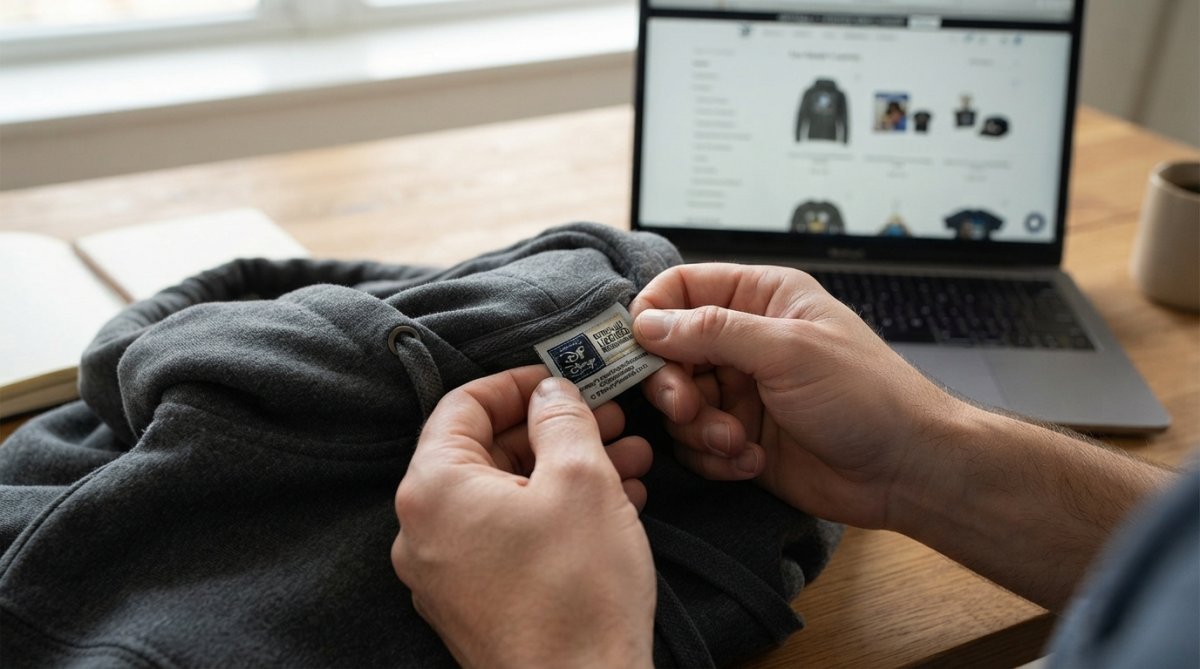
How to spot bootleg merchandise: look for missing or misspelled brand tags, blurry printed logos, off-center artwork, and prices that sit far below every other seller. Any one of these alone is a yellow flag. Two together is a pass.
Specific things to check:
- The tag. Licensed apparel carries a printed tag with the brand name, size, and care instructions. Blank or generic tags are common on counterfeits.
- The artwork. Compare the logo to an official image. Counterfeits often use slightly wrong colors or stretched proportions.
- The listing photos. Sellers using only manufacturer mockups, with no real product photo, are usually printing per order.
- The seller name. A storefront with no brand identity and no reviews is not a store you can hold accountable.
Fan Merchandise Quality Standards: What Separates Durable Gear from Disposable Tees
Fan merchandise quality standards come down to three things: fabric weight, print method, and construction. A heavyweight cotton tee with a screen-printed design will outlast a thin shirt with a heat-pressed transfer, often by years.
- Fabric weight. Heavier cotton holds its shape. Thin blends pill and stretch.
- Print method. Screen printing bonds ink into the fabric. Heat transfers sit on top and crack.
- Stitching. Reinforced seams at the shoulders and hem survive repeated washing.
- Colorfastness. A quick cold-water hand wash before the first wear reveals whether dye bleeds.
Where to Buy Licensed vs Fan-Made Merch Without Getting Burned
The legal line is simpler than most buyers expect. Officially licensed products are approved by the rights holder and pay royalties. Fan-made creations exist in a gray area: original artwork inspired by a fandom is generally fine to sell, but reproducing protected characters or logos is not.
The Legal Line Between Fan Art and Counterfeit Goods
Fan art becomes counterfeit when it copies protected characters or logos without permission. Original interpretations, parody, and clearly transformative designs occupy different ground. For buyers, the takeaway is practical: a store selling "inspired by" designs is not the same as one selling exact character reproductions at suspicious prices.
Niche Fan Gear: Sports, Gaming, Dorm Decor, and Beyond
Niche markets are where online fan merchandise beats physical retail outright. A local store cannot stock every team's jersey, every game's collectibles, and every dorm decor trend at once. Online sellers can, and the best ones organize by fandom rather than by product type. The gap most guides leave open is that "fan merchandise" is not one market, it is at least four, and the right place to buy depends entirely on which one you are shopping.
- Sports apparel and team gear. Jerseys, hoodies, and sideline caps dominate. The signal to look for is whether the seller names the licensing program behind the product, for example, whether a collegiate item is sourced through a recognized collegiate licensing program or a professional league's official licensing arm. Sellers who name the program are almost always selling approved goods; sellers who describe items only as "officially inspired" are not.
- Video game collectibles. Limited-edition figures, steelbooks, and apparel sell out fast, so restock communication matters more here than in any other category. The practical move is to follow the publisher's own store and the licensed collectible manufacturers it partners with, then use resellers only for sold-out items, and expect to pay a premium there.
- Anime and manga. This is the category where the licensed-versus-fan-made line is blurriest. Licensed apparel and figures come through the North American licensing arms of the major Japanese studios and publishers. Fan-made goods, enamel pins, prints, charms, are typically sold through artist-run storefronts and at conventions, and are usually original interpretations rather than reproductions. Buyers who want screen-accurate character art should stick to licensed channels; buyers who want original art should expect to buy directly from the artist.
- Dorm decor and lifestyle accessories. Posters, mugs, tapestries, and bedding move fastest in late summer. Order early, and check the print method on textiles, a dye-sublimated blanket holds color far better than a heat-pressed one.
- Creator and influencer merch. Often print-on-demand, so expect longer fulfillment windows and less consistent sizing than licensed apparel. The trade-off is that you are buying directly from the creator, which usually means better design intent and worse logistics.
Why Fandom Type Changes Where You Should Buy
The reason niche matters is that licensing works differently in each category. Professional and collegiate sports operate through centralized licensing programs, so authenticity is relatively easy to verify. Video games and anime rely on a mix of publisher-owned stores and third-party licensees, so verification takes more work. Creator merch is often unlicensed by design, it is the creator's own brand.
Shipping, Sustainability, and What Most Buyers Overlook
Shipping and sustainability are the two factors buyers notice last and regret most, and they are the two factors almost no guide actually compares. Most articles tell you to "check the return policy" and move on. Here is the comparison they skip.
- Print-on-demand prints each item after the order is placed, usually at the facility closest to the buyer. That shortens the last leg of transit, which is the most carbon-intensive leg per mile. The trade-off is that returns are harder, many print-on-demand sellers accept returns only for defects, not for sizing or change of mind, because the item was made specifically for you.
- Centralized warehouse fulfillment ships from one or a few large facilities. Tracking is more predictable and returns are simpler, but a single item may cross the country, and packaging is often heavier and less optimized.
What to actually ask before you buy:
- Where does it ship from? A seller who can name the fulfillment region is usually a seller who knows their supply chain.
- What is the packaging? Apparel shipped in a poly mailer has a very different footprint than apparel shipped in a rigid box with tissue and inserts. Neither is automatically better, but the answer tells you whether the store thought about it.
- Is the item made to order or pulled from stock? Made-to-order reduces overproduction waste but extends fulfillment. Stock reduces wait time but risks dead inventory.
- Does the seller publish a supplier list? A store that names its suppliers is telling you something verifiable. One that uses "eco-friendly" as a label with no detail is not.
The Sustainability Trade-Off Most Buyers Never Hear
The uncomfortable truth is that the most sustainable purchase is usually the one you keep longest, not the one with the greenest label. A heavyweight, screen-printed hoodie that lasts five years has a lower per-wear footprint than three thin, heat-pressed tees that fade in a season, even if the durable one shipped farther and arrived in a plastic mailer. That reframes the whole comparison: shipping distance and packaging matter, but durability matters more, and durability is the factor most buyers can actually verify before checkout.
Frequently Asked Questions
Where can I find the best places to buy fan merchandise online?
Curated resellers, official brand stores, and print-on-demand platforms each serve different needs. Curated resellers vet suppliers and offer quality control, while official stores guarantee authenticity. Print-on-demand platforms let creators sell custom designs but quality varies widely. Check customer reviews, return policies, and whether the store clearly labels licensed versus fan-made items before buying.
How can you tell if fan merchandise is authentic?
Look for official trademarks, holographic stickers, and consistent stitching on apparel. Licensed products include copyright notices and brand-specific tags. If the price seems far below retail or the seller cannot confirm licensing, treat it as fan-made or bootleg. Legitimate sellers list their licensing status openly and provide clear product photos showing tags and packaging.
Is fan-made merch legal to buy and sell?
Fan-made merchandise occupies a legal gray area. Selling items that use trademarked characters or logos without a license infringes intellectual property rights. However, some creators operate under fair use or licensing agreements. As a buyer, you can legally purchase fan-made items for personal use, but reselling them at scale without permission carries risk. Always check whether the seller discloses their licensing status.
What are the best platforms for finding unique, creator-made fan art?
Print-on-demand platforms like Redbubble and TeePublic host thousands of independent creators selling fan-inspired designs. Etsy connects buyers directly with artists making handmade or limited-edition items. For curated options, specialty resellers handpick products from trusted creators, offering a vetted selection with consistent quality standards and reliable shipping.
Fan merchandise shopping rewards patience more than speed. The stores worth returning to are the ones that name their suppliers, show real product photos, and stand behind what they ship. That is the standard DisneyFanatic was built on: a curated selection of apparel, hoodies, and mugs from trusted third-party brands and creators, chosen so you know what arrives before you open the box. Browse the collection and find gear that holds up past the first wash.